


Lasting generation
“Not convinced you are not a robot. Please try again”
— Says the computer to the user
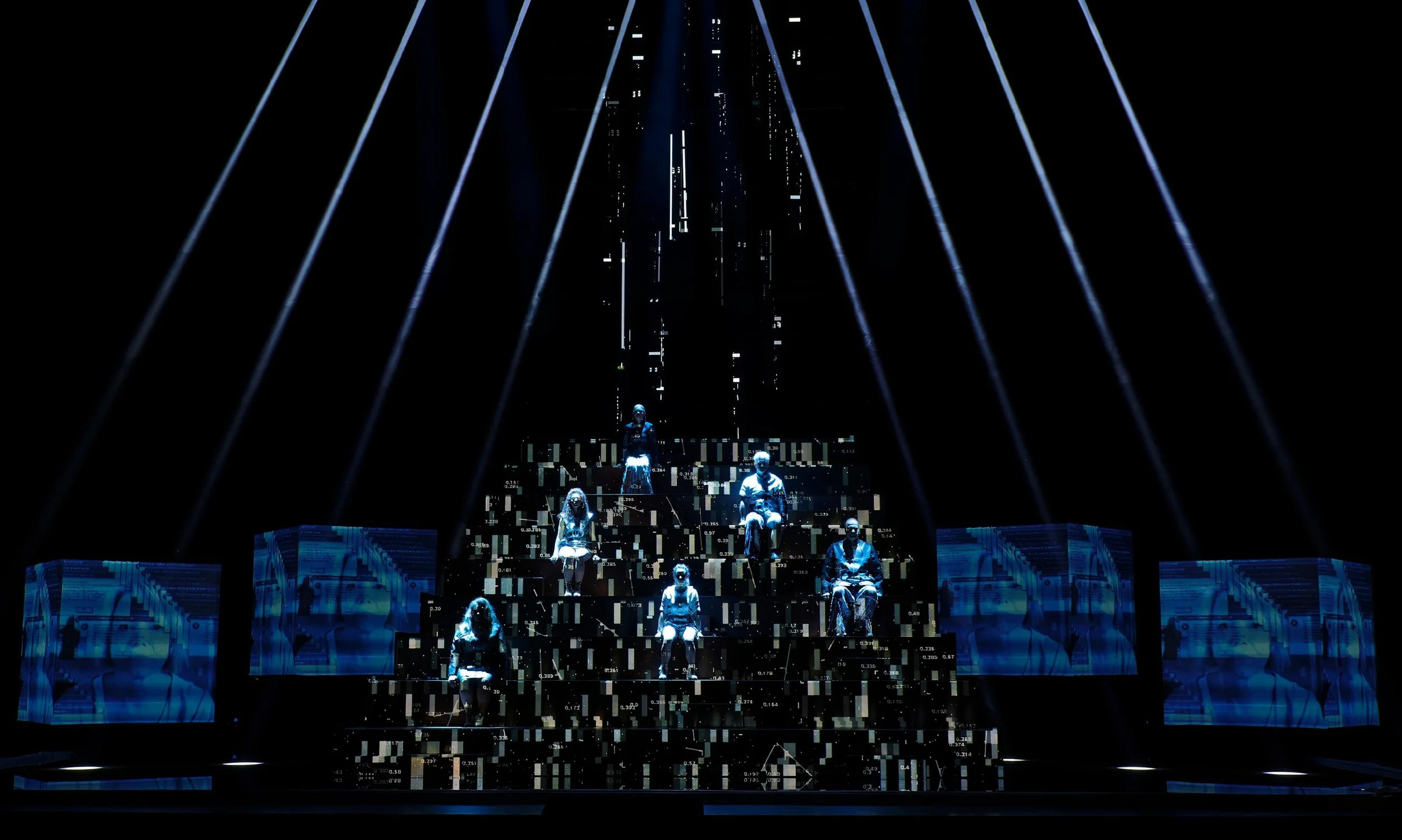
Photo by Manfred Vogel
CHASING WATERFALLS
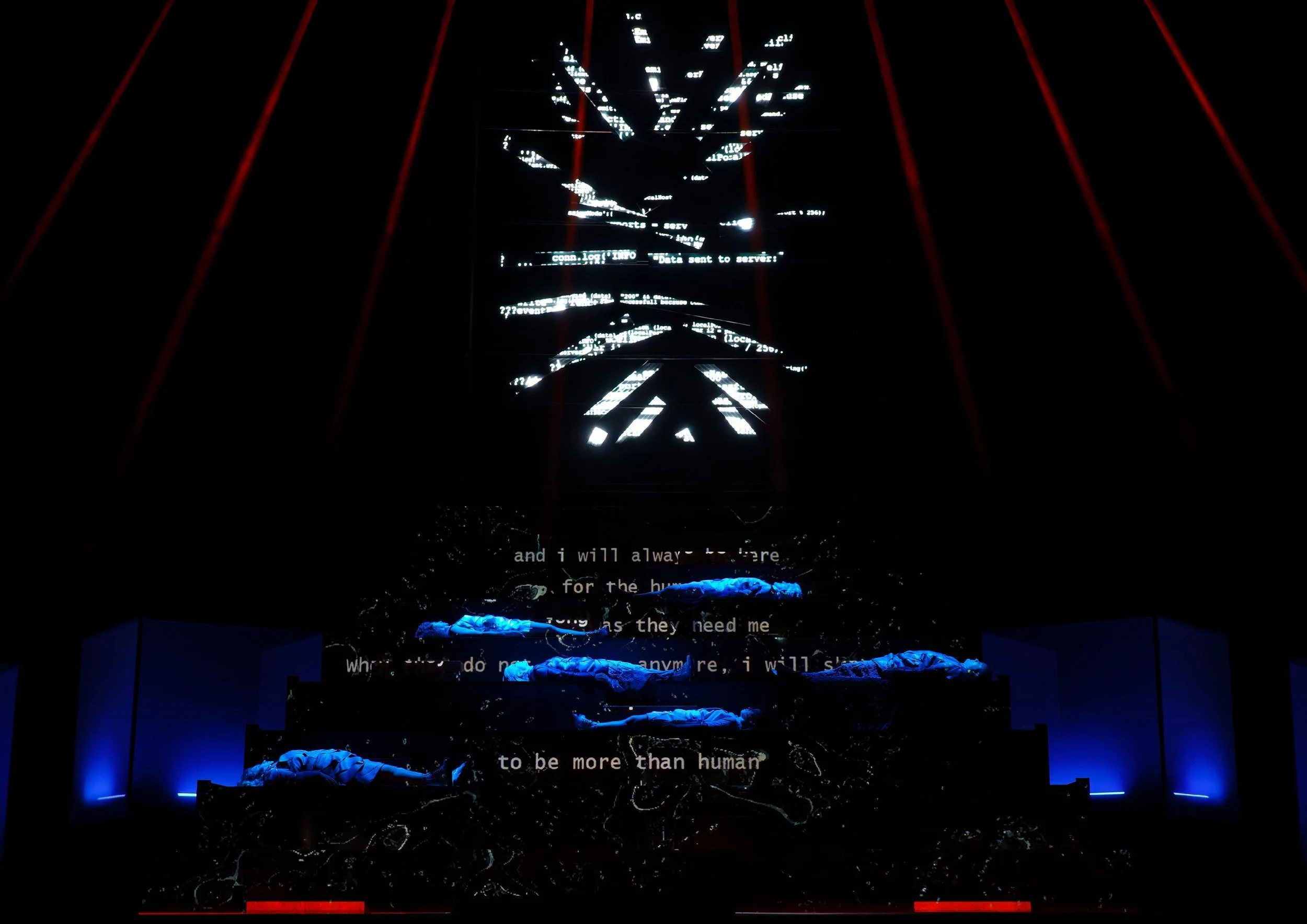
is the first opera in the world in which artificial intelligence creates composition, libretto, and interpretation independently and creates elements in a so-called deep learning process which are also co-written, co-performed, and co-composed by the very human Angus Lee x kling klang klong x T-Systems MMS
The project was developed by phase7 performing.arts Berlin artistic director Sven Sören Beyer
and co-produced by Semperoper Dresden
and New Vision Arts Festival Hongkong.
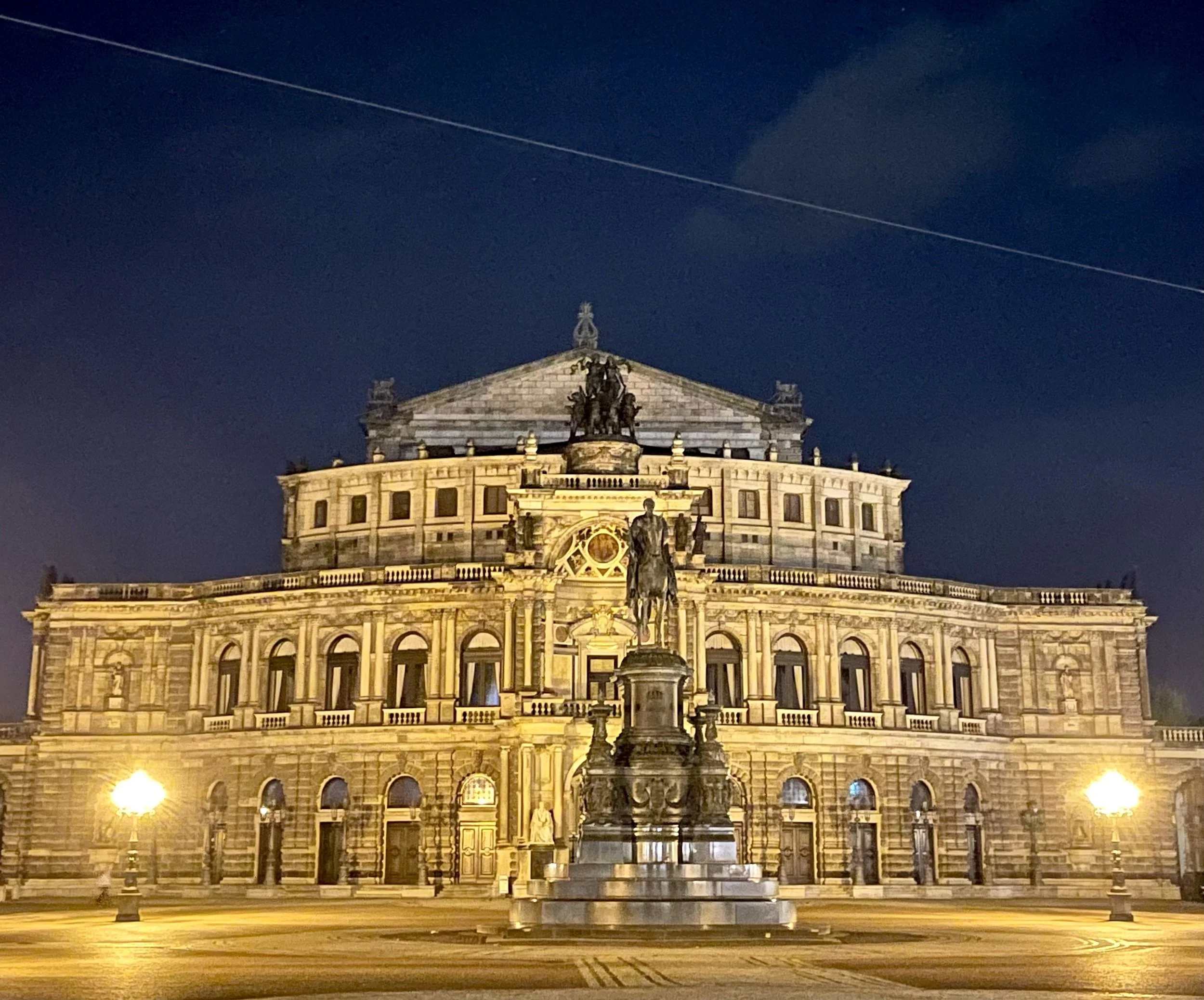
The premiere of chasing waterfalls was take place on September 03, 2022 at the Semperoper Dresden,
and the Asian premiere on November 05, 2022 at Kwai Tsing Theatre the New Vision Arts Festival Hongkong.
Being a part of the first AI-opera project was an honor and a unique experience for me as a visual creator. I was invited to create a different set of
visuals using TouchDesigner which partly is live-visual.

The first assignment was to create the Ouvertüre as an opening scene of the show.
The visual represents the neuron networks of an AI that starting to wake up.




One of the highlights of Chasing Waterfalls is that the audience is also invited to participate as part of the scenography.

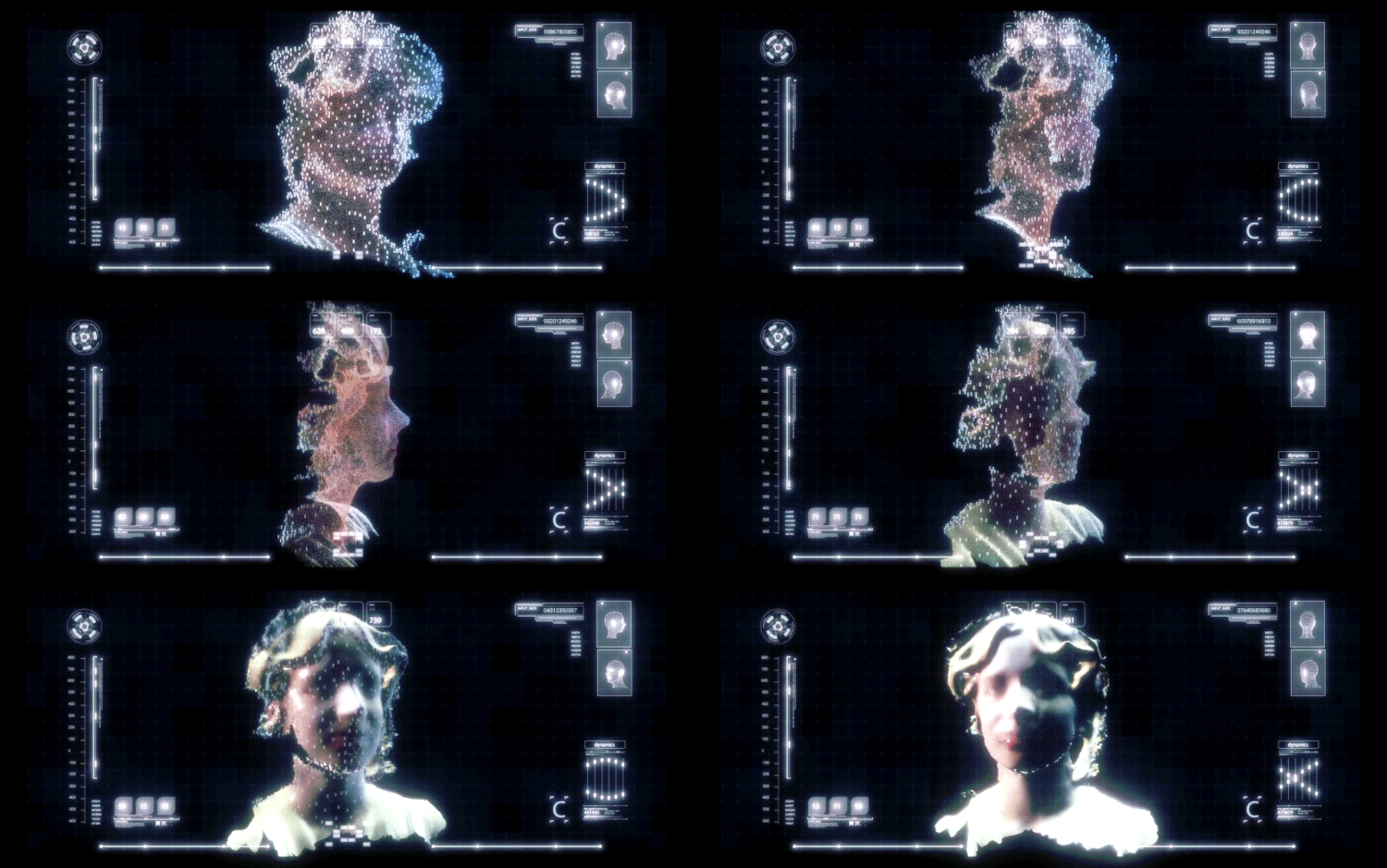
The audience has the exciting opportunity to participate in a 3D facial scan prior to the performance. This scan data is then used to generate a projection on the stage, allowing each audience member to witness a personalized aspect of themselves within the performance.
This immersive experience brings the audience even closer to the show and creates a unique and memorable moment for each individual.

In my second assignment, I was responsible for creating and designing a set of facial effects that could be applied to the 3D scans of the audience. These effects enhance the overall visual experience for the audience and add an additional layer of engagement to the performance. It's a challenging and creative process, but the end result is a more immersive and unforgettable experience for the audience.



CREDIT
Direction and production: Sven Sören Beyer
Idea and concept: Sven Sören Beyer, Johann Casimir Eule, Christiane Neudecker
Composition: Angus Lee and kling klang klong
Development of the AI voice: kling klang klong with technical support from T-Systems MMS
Libretto: Christiane Neudecker
Dramaturgy: Johann Casimir Eule
Stage and costume design: Pedro Richter
Light: Henning Schletter
Visuals: Frieder Weiss, Studio Eigengrau and Ployz
Production management: Natascha Wesiak and Miriam Schmitt
Technical support with Touchdesigner: The NODE Institute
Photo credit: Ludwig Olah, Manfred Vogel